
Ask five people in Michigan whether they need all-wheel drive, and you'll get five different answers. Some swear by it for the first snowfall. Others have driven front-wheel drive sedans through every Southfield winter without a second thought. At Matick Buick GMC, that question comes up almost every day on the sales floor. It usually starts with the same phrase: AWD vs. 4WD — what's the real difference, and does it even matter for the way you actually drive? Here's the honest, no-jargon breakdown.
Key Takeaways
- AWD works automatically in the background and suits drivers who want year-round traction without doing anything extra.
- 4WD is driver-engaged and built for towing, deep snow, and off-road situations where a truck needs maximum grip.
- 2WD is the most fuel-efficient and affordable option, and it's plenty capable for most paved-road driving.
- The right choice comes down to climate, terrain, towing needs, and budget — not just brand loyalty.
- GMC offers all three across its lineup, so there's a configuration for nearly every driving style.
What's the Real Difference Between AWD, 4WD, and 2WD?
In short, AWD sends power to all four wheels automatically and full-time, with no input from the driver. 4WD is a system the driver switches on for extra traction, usually in a truck or SUV. And 2WD sends power to just one axle — front or rear — which keeps things simple and efficient.
The difference between AWD and 4WD really comes down to control. One reacts on its own. The other waits for you to flip a switch.
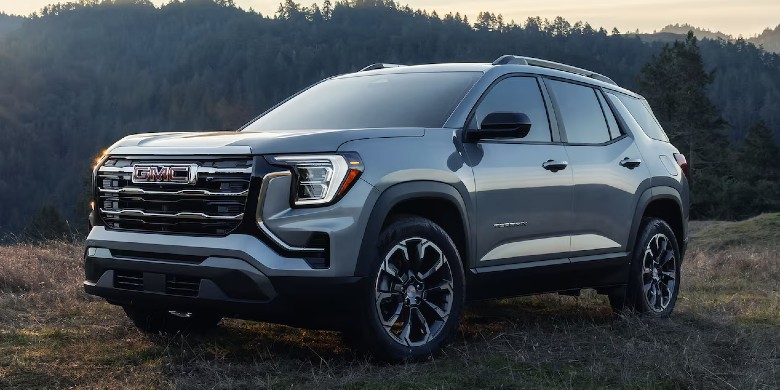
Crossovers and car-based SUVs, like the GMC Terrain, typically use AWD. It's smooth, doesn't require much thought, and works well on wet or lightly snowy roads.
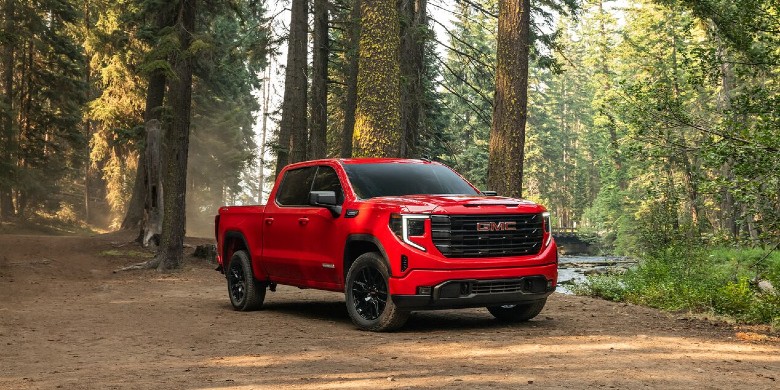
Trucks and body-on-frame SUVs, like the Sierra and Yukon, often offer 4WD instead. It's built to handle mud, gravel, deep snow, and towing loads that AWD systems aren't designed for.
A common related question is the FWD vs. AWD comparison. Front-wheel drive sends power only to the front wheels and is the most efficient setup, while AWD adds the rear axle into the mix whenever the front wheels start to slip. 2WD, meanwhile, is simply the base layout most vehicles start with, before AWD or 4WD gets added as an option.
- • AWD: automatic, full-time, ideal for rain and light-to-moderate snow
- • 4WD: driver-selected, high and low range, built for towing and off-road use
- • 2WD: single-axle power, the most affordable and fuel-efficient layout
All-Wheel Drive: GMC AWD Explained
GMC AWD systems, like those in the Terrain and Acadia, constantly monitor each wheel. They quietly shift power to whichever ones have the most grip. There's no button to press and no decision to make. It just works, which is exactly why so many Southfield drivers like it for daily commuting.
A question that comes up often: "Can I drive in AWD all the time?" Yes — that's actually the point. Unlike part-time 4WD, AWD is designed to stay engaged on dry pavement, wet roads, and light snow without added wear. It won't replace winter tires in a heavy blizzard, and it won't help much for serious off-roading or towing. But for the mixed conditions most drivers see between fall and spring, it's a low-maintenance way to add confidence behind the wheel.
Four-Wheel Drive: Built for Trucks and Tough Jobs
On trucks like the Sierra 1500, the GMC Sierra 4-wheel-drive button (or dial, depending on the trim) lets the driver choose among 2Hi, Auto, 4Hi, and 4Lo.
2Hi keeps power to the rear wheels for everyday driving and the best fuel economy. Auto and 4Hi add front-axle power for slippery roads, job sites, or towing on loose surfaces. 4Lo gears things down for serious off-road situations — think steep grades or deep mud — where low-speed torque matters more than speed.
Because 4WD is driver-engaged rather than automatic, it takes a bit more attention than AWD. Most owner's manuals recommend avoiding 4Hi or 4Lo on dry pavement, since the front and rear axles can bind, causing extra wear. For anyone regularly towing a trailer, plowing snow, or heading off the beaten path, though, that extra control is exactly what makes 4WD the right call over AWD.
Two-Wheel Drive: The Practical Baseline
The 2WD vs. 4WD difference is really about how many axles are doing the work. 2WD vehicles send power to only the front or only the rear wheels. That means fewer moving parts, less weight, and better fuel economy — often a meaningful difference at the pump over the course of a year of driving.
So how do I know if my car is 2WD or 4WD? The quickest way is to check the trim badge on the tailgate or rear hatch, or look at the window sticker and build sheet, which will list the drivetrain plainly. Vehicles with 4WD or AWD also typically have a shift knob, dial, or button cluster near the steering column. If that's missing, it's a safe bet the vehicle is 2WD. A quick VIN lookup or a call to the service desk at Matick Buick GMC will confirm it in a couple of minutes.
Which Is Better — 2WD, 4WD or AWD?
"Which is better, 2WD, 4WD or AWD?" depends entirely on the driving that vehicle will actually see. A daily commuter on plowed Southfield roads may never need more than 2WD. A family crossover handling rain, light snow, and the occasional road trip is a great fit for AWD. And a truck that tows a boat, hauls equipment, or heads off-road benefits most from true 4WD. The table below lays out the trade-offs at a glance.
| Drivetrain | Best For | Fuel Economy | Example GMC Models |
|---|---|---|---|
| AWD | Rain, snow, daily commuting | Good | Terrain, Acadia |
| 4WD | Towing, off-road, deep snow | Lower when engaged | Sierra 1500, Yukon, Canyon |
| 2WD | Paved roads, budget-minded buyers | Best | Sierra 1500 (2WD trims), Envista |
Choosing the Right Drivetrain for Your Drive
There's no single "best" drivetrain — just the right one for how a vehicle gets driven. Whether that means the automatic confidence of AWD, the rugged control of 4WD, or the simplicity and efficiency of 2WD, our team at Matick Buick GMC in Southfield can walk through real-world examples on the lot so that the choice feels obvious rather than overwhelming.
Not sure which drivetrain fits your driveway, commute, or towing needs? Stopping by Matick Buick GMC for a quick walk-around is an easy way to compare AWD, 4WD, and 2WD models side by side before making a decision.
FAQ
No — a vehicle is built with either an AWD system or a 4WD system, not both. Some GMC models do offer selectable settings within their system, like Auto or 4Lo on 4WD trucks, but that's different from switching between AWD and 4WD entirely.
It depends on the driving. 2WD suits paved-road commuters who want efficiency, AWD suits everyday drivers who want automatic traction, and 4WD suits towing, off-road, or heavy-snow situations.
Check the trim badge, window sticker, or build sheet, or look for a 4WD shift control near the steering column. A quick VIN check at the dealership confirms it as well.
Generally, yes. 2WD has fewer drivetrain components, which typically means lower repair costs and better fuel economy over time compared to AWD or 4WD systems.
For most daily driving, yes — AWD adds traction on wet and snowy roads without any driver input. It still works best when paired with good winter tires in severe conditions.
Matick Buick GMC
Address: 29300 Telegraph Rd, Southfield, MI 48034
Sales Hours:
Monday: 9:00 AM - 7:00 PM
Tuesday: 9:00 AM - 6:00 PM
Wednesday: 9:00 AM - 6:00 PM
Thursday: 9:00 AM - 7:00 PM
Friday: 9:00 AM - 6:00 PM
Saturday - Sunday: Closed
Michigan's Fastest Growing Buick GMC Dealership